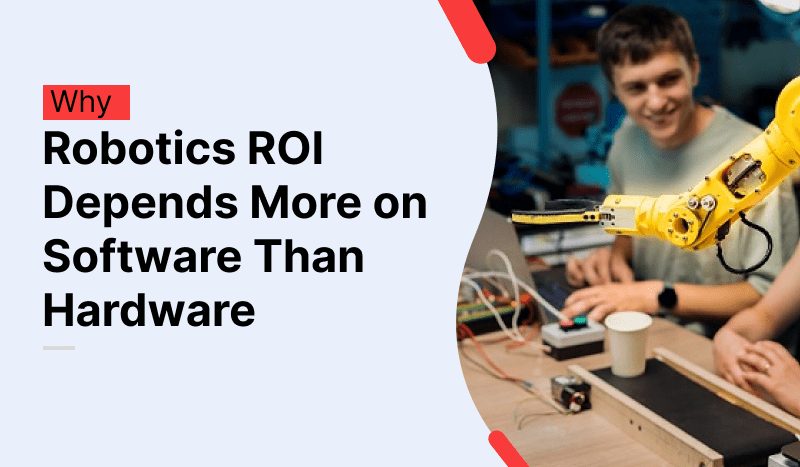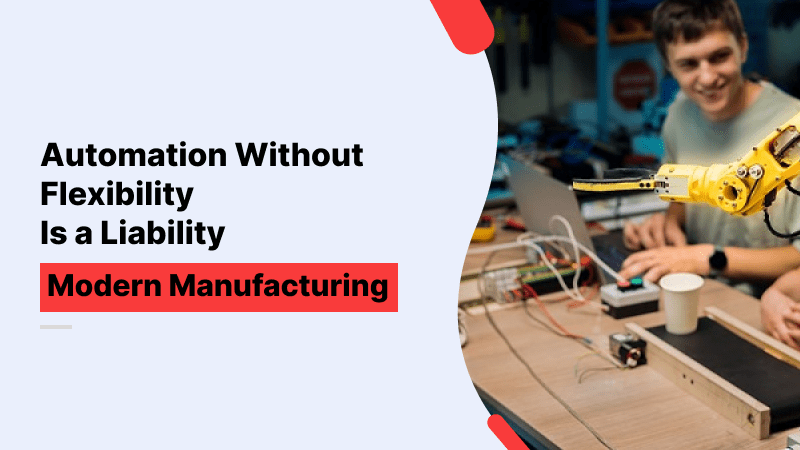
For decades, automation in manufacturing was largely synonymous with replacement. Robots were introduced to eliminate manual tasks, reduce labor costs, and increase throughput. But in 2026, a different narrative is gaining traction — one where humans and machines work side by side, not in opposition.
Enter collaborative robots, or cobots. Unlike traditional industrial robots, cobots are designed to share workspaces with people, respond to their movements, and support, rather than supersede, human effort. And as workflows evolve, cobots are unlocking new levels of safety, productivity, and flexibility on the factory floor.
What Makes Cobots Different?
Cobots differ from conventional robots in four fundamental ways:
- Safety-aware design: Built-in sensors, force limits, and speed controls make cobots safe to operate around people without cages or barriers.
- Ease of deployment: They can be quickly reprogrammed and repositioned, making them ideal for high-mix, low-volume environments.
- Task sharing: Cobots are often used to assist humans in tasks such as lifting, positioning, or precision assembly.
- Cost-effectiveness: Their relatively low setup costs and versatility make them accessible to small and medium-sized manufacturers.
This collaborative model is not just a tech trend — it’s a strategic shift in how manufacturers approach work design.
Human Strength + Robotic Precision
One of the most effective use cases for cobots is augmenting human capabilities rather than replacing them. For instance:
- A worker guides a cobot in placing heavy or awkward components with millimeter precision.
- Cobots handle repetitive tasks like screwdriving or adhesive dispensing, while humans oversee quality and assembly sequencing.
- In packaging lines, cobots sort, box, and label, allowing workers to focus on exception handling and workflow optimization.
These hybrid workflows reduce strain, injury risk, and error rates — all while improving cycle time.
Some factories are using gesture-based control systems integrated with wearable devices to let workers direct cobots intuitively. This has opened doors for teams previously hesitant to adopt robotics.
Infrastructure Matters: Power, Wiring, and Sensing
As cobots become more prevalent, manufacturers are paying closer attention to the electrical and physical infrastructure that supports them. Unlike fixed robots, cobots often move between stations and require dynamic setups.
One overlooked area is wire gauge accuracy. Improper gauge selection can lead to overheating, signal degradation, or voltage drops — all of which impact cobot responsiveness and safety. Engineers rely on planning tools like the Wire Gauge Calculator to select appropriate cabling based on load, length, and amperage. These small design decisions make a big difference when powering mobile or modular robotics.
Adapting Spaces to Cobots — Not the Other Way Around
Cobots thrive in flexible environments, which means the traditional factory layout, designed for rigid automation, must evolve. Mobile workstations, adjustable lighting, and easy-to-reconfigure lines are becoming the norm.
To make these environments effective, facilities need to balance power loads carefully, especially when multiple cobots or assistive devices operate in the same zone. That’s where tools like the Box Fill Calculator become critical for safe, compliant junction box and conduit planning. Even seemingly minor infrastructure oversights can delay deployments or lead to unnecessary downtime.
These planning steps are often invisible in outcomes but essential in ensuring a safe and scalable collaborative environment.
Cobots in Action: Use Cases Across Industries
Cobots are redefining workflows in a variety of manufacturing sectors:
- Electronics: Assisting in delicate assembly, testing, and soldering
- Automotive: Handling door panel assembly, windshield placement, and sealant application
- Pharmaceutical: Supporting sterile packaging, counting, and labeling tasks
- Consumer goods: Performing repetitive packaging or pick-and-place operations
In each case, cobots allow human workers to focus on judgment, precision, and adaptability, while the machines take over the heavy lifting or repetitive elements.
Some factories are even incorporating AI vision to allow cobots to identify components visually — reacting in real-time rather than following static coordinates.
Training and Upskilling: A Collaborative Mindset
Introducing cobots also requires rethinking training and workforce development. Operators are no longer just machine feeders — they’re coordinators, programmers, and system supervisors.
Progressive companies are investing in:
- Cobotics certification programs
- On-the-job training with sandbox simulators
- Cross-functional teams where engineers and operators collaborate on programming tasks
Interestingly, educational nonprofits like See-Dream are helping bridge the gap by offering hands-on robotics exposure for vocational students and early-career workers — preparing them for hybrid human–machine work environments.
Cobots and ROI: Faster Than Traditional Automation
Unlike traditional automation, which often takes years to show a return on investment, cobots begin generating ROI within months. Why?
- Lower integration costs
- Faster deployment
- Minimal layout disruption
- Immediate labor relief in repetitive tasks
They also provide data streams — recording usage patterns, cycle times, and downtime reasons — that feed into larger factory analytics. This makes them both productive tools and contributors to the smart factory data ecosystem.
Final Thoughts: Collaboration Is the New Automation
The age of automation wasn’t wrong; it was incomplete. By focusing only on replacing tasks, manufacturers missed opportunities to make work more human-centric, adaptable, and resilient.
Collaborative robots don’t replace workers; they support them. And in doing so, they unlock a future where manufacturing is safer, smarter, and more satisfying for the people at the heart of it.
In 2026 and beyond, the smartest factories won’t just be automated — they’ll be collaborative.