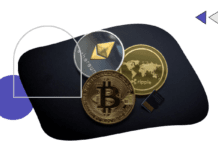
The Internet of Things continues to expand at an extraordinary pace, connecting everything from household appliances and smart meters to industrial equipment and medical devices. As these devices grow in number and capability, the need for secure communication, reliable identity verification, and tamper-resistant data systems has become increasingly urgent. Traditional security models often struggle to keep up with the scale and complexity of modern IoT ecosystems, which is why blockchain technology is emerging as a powerful solution. While blockchain is commonly known for powering digital assets, its potential in IoT security goes far beyond financial applications. In fact, many of the underlying technologies used in everyday tools, such as a bitcoin wallet, illustrate how decentralised security principles can be applied to protect connected devices.
The Limitations of Traditional IoT Security
IoT systems rely on networks of devices that constantly exchange data. This creates a large and often vulnerable attack surface. Centralised servers remain a common point of failure, and once compromised, an attacker can access or manipulate numerous devices at once. Many devices also operate with limited computing power, making it difficult to integrate robust traditional security frameworks. As the volume of connected hardware grows, scaling these systems becomes increasingly challenging.
Blockchain offers an alternative approach. Instead of relying on a single authority, the data is distributed across a network of nodes. This removes the central point of failure and provides every device with a verifiable and tamper-resistant source of truth.
Why Blockchain Fits the IoT Landscape
Blockchain aligns naturally with the demands of IoT environments. It provides decentralised storage, transparent record-keeping, and cryptographic verification without requiring extensive device resources. Once data is written to the chain, it cannot be altered without consensus from the network, making it ideal for systems that need strong protection against tampering.
Blockchain also supports identity management for devices. Each device can have its own unique, verifiable identity stored on the ledger. This eliminates the need for a central authority to validate communication between devices and significantly reduces the risk of identity spoofing. The result is a more resilient system where every device can authenticate itself and its data with minimal overhead.
Improving Device-to-Device Communication
Communication between IoT devices often involves multiple layers of verification to ensure messages are coming from trusted sources. Blockchain simplifies this process by acting as a shared reference point. Devices can verify each other against the blockchain, which serves as a cryptographically secured registry.
This is particularly helpful in large networks where devices frequently join or leave the system. Instead of relying on a centrally managed list of trusted devices, the blockchain ensures distributed trust. This not only reduces complexity but also lowers the risk of malicious devices infiltrating the network undetected.
Enhancing Data Integrity and Traceability
Data generated by IoT devices is valuable across many industries. It can influence supply chain operations, energy distribution, healthcare monitoring, and real-time analytics. Ensuring this data is accurate and unaltered is essential.
Blockchain provides a reliable method for maintaining the integrity of data logs. Once information is added to the chain, it is timestamped and permanently recorded. Any attempt to modify past entries would require altering every subsequent block, which is computationally impractical. This makes blockchain ideal for industries where traceability and transparency are critical. For example, in logistics, blockchain can track a product’s journey across different IoT sensors, ensuring every reading is trustworthy.
Securing Firmware Updates and Device Management
Firmware updates are one of the most overlooked vulnerabilities in IoT devices. Attackers often exploit insecure update processes to inject malicious software. Blockchain helps address this challenge by providing a secure distribution method.
Manufacturers can publish firmware updates to the blockchain, where devices can verify the authenticity of the update before installation. This dramatically reduces the risk of tampering and ensures that only trusted updates are applied. It also streamlines device management for large deployments, enabling devices to autonomously confirm the integrity of the code they are receiving.
Facilitating Autonomous IoT Networks
As IoT becomes more advanced, devices are expected to operate more autonomously. Blockchain and smart contracts make this possible. Smart contracts can automate interactions between devices without relying on central systems. For example, sensors in a smart energy grid can use smart contracts to trigger real-time adjustments, such as switching to backup systems or redistributing power loads.
Autonomous fleets of drones, industrial robots, or connected vehicles could also coordinate using blockchain. Each device would act based on verifiable data and predefined rules stored in smart contracts, reducing the need for human intervention and improving efficiency across complex environments.
The Intersection of IoT and Decentralised Economy
As IoT systems continue merging with digital infrastructure, blockchain also enables new economic models. Microtransactions between devices become feasible when powered by decentralised networks. Connected devices could purchase services, request data, or pay for energy on demand.
These machine-to-machine economies are still emerging, but blockchain is laying the foundation. Devices can securely transact, verify ownership, manage identities, and exchange information without delays or costly intermediaries. This creates a more fluid, responsive ecosystem where devices become participants in a broader digital economy.
Challenges to Overcome
Despite its advantages, integrating blockchain into IoT is not without challenges. Scalability remains a concern, especially for high-volume environments with millions of transactions. Some blockchains struggle to process large amounts of data quickly, although new generation blockchains and layer-two solutions are actively addressing this issue.
Energy consumption is another consideration. While many modern chains are far more efficient than the early proof-of-work models, choosing the right blockchain infrastructure is crucial for IoT systems that require low-latency and environmentally friendly solutions.
Regulation and interoperability also play important roles. For blockchain-enabled IoT to succeed, different systems and industries must adopt compatible standards. Collaborative development and open frameworks will be essential for widespread adoption.
Conclusion
Blockchain is emerging as a foundational technology for securing and advancing the next generation of IoT devices. Its decentralised architecture, immutable record-keeping, and cryptographic identity management address many of the core vulnerabilities in today’s connected systems. As manufacturers, developers, and industries continue to adopt these tools, IoT networks will become more secure, reliable, and autonomous. Although challenges remain, the combination of blockchain and IoT is paving the way toward a future where connected devices can operate with greater trust and efficiency than ever before.